
 Português
 English
 Español
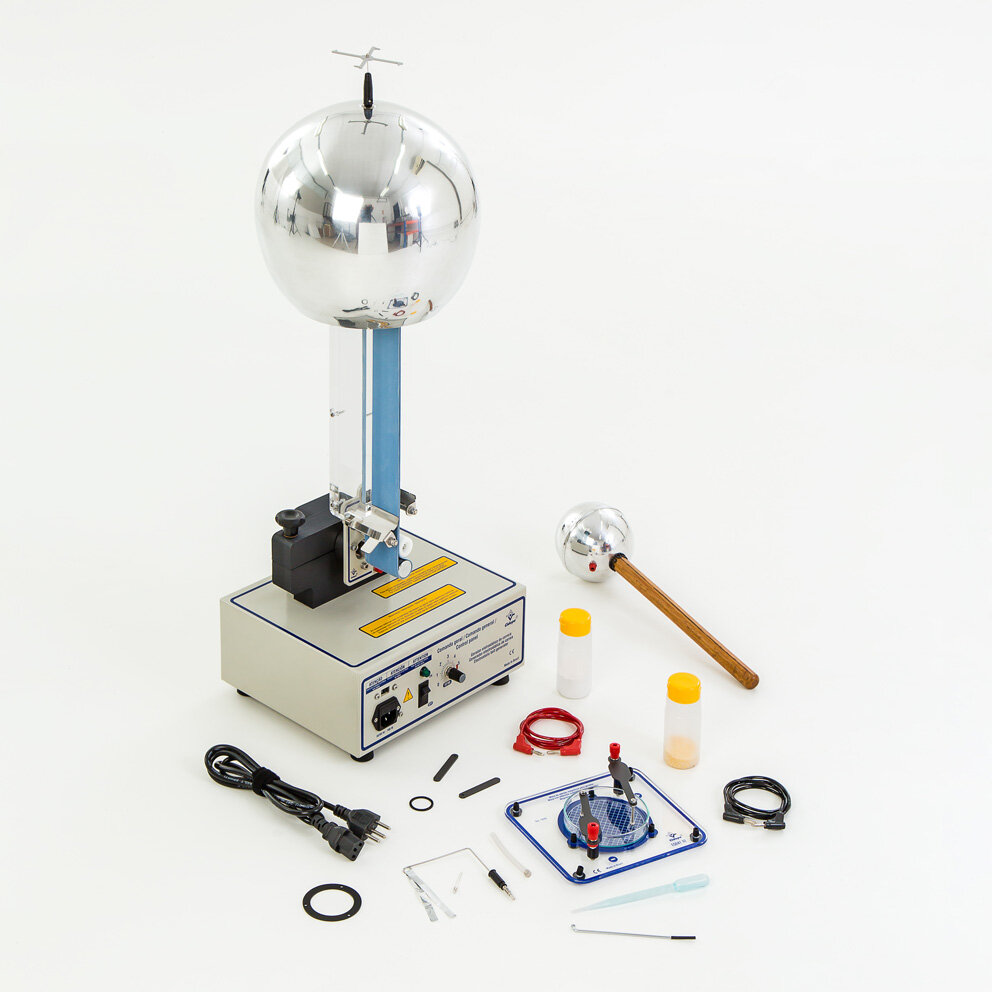
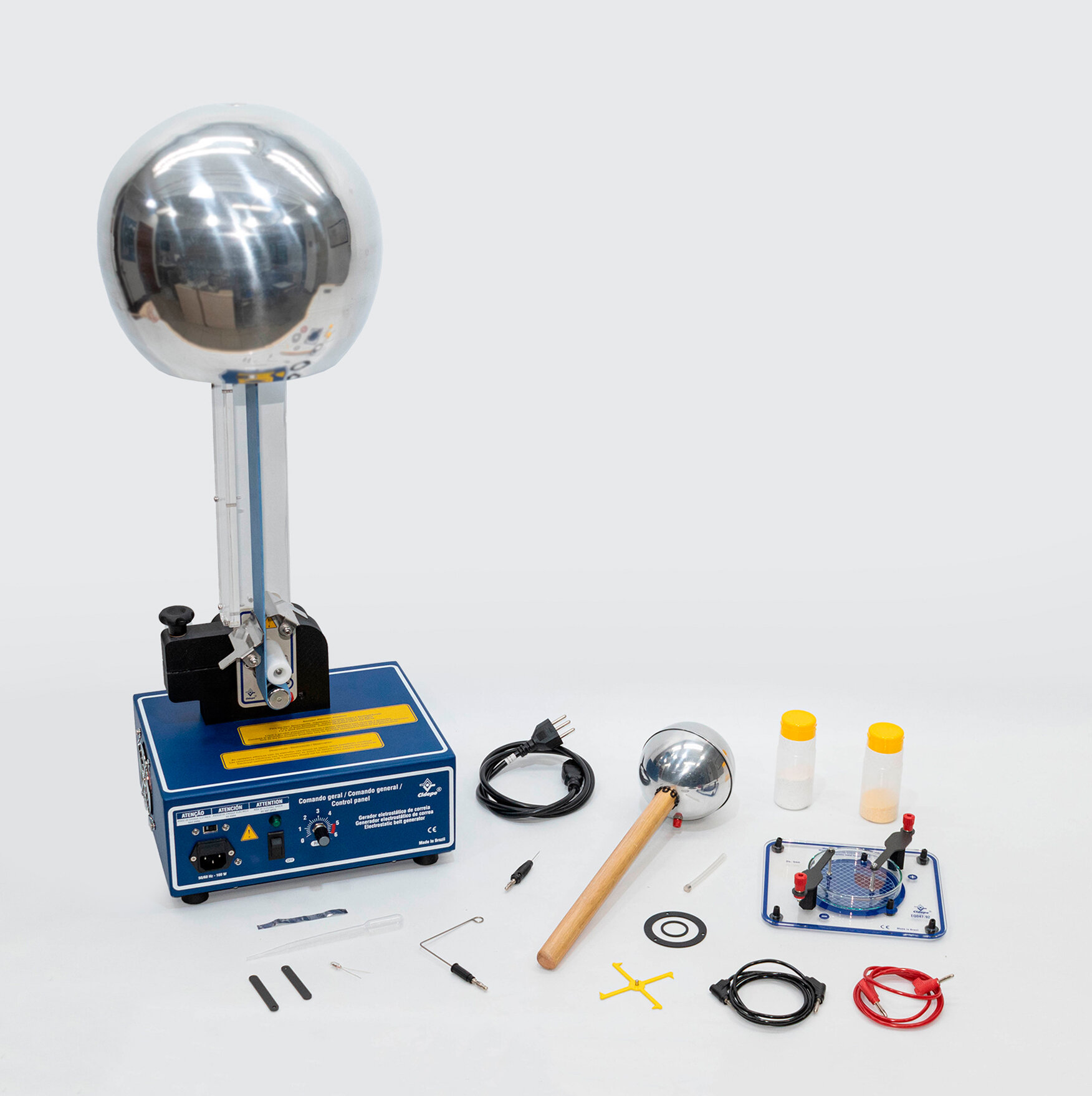
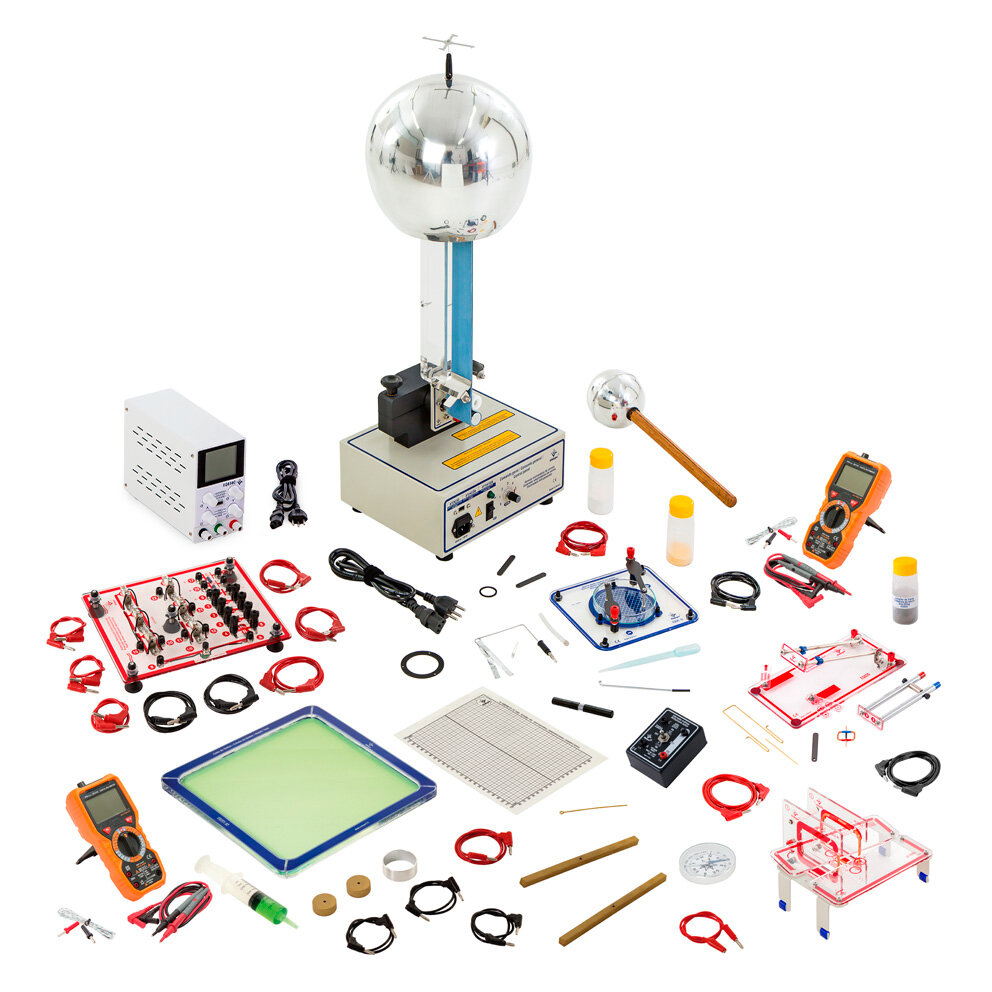
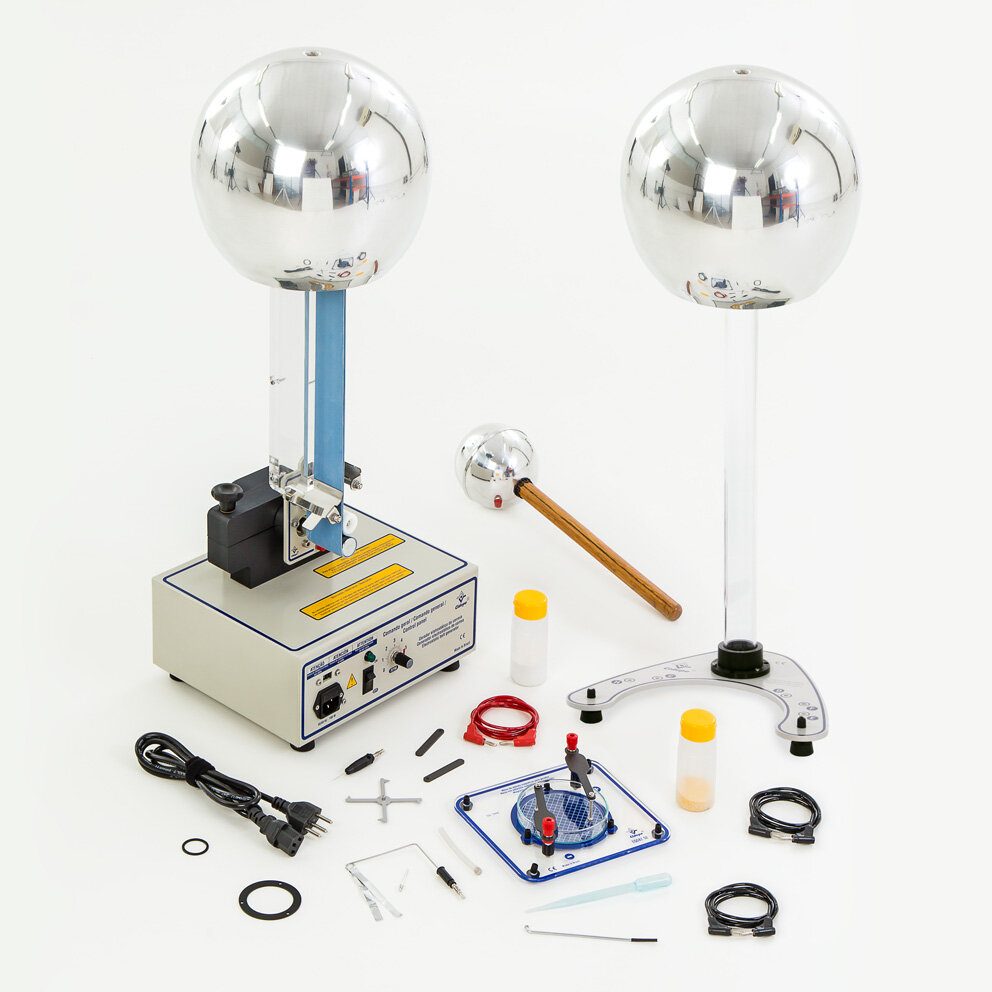
Electrostatic generator, 400 kV, Van de Graaff type, with secondary tower.
Code: EQ047E

Function
Intended for the study of physics, laboratory physics experiments on: Engineering. Physics. Electricity. Electrostatics. Discharge in air under atmospheric pressure. The cathode and anode electrodes in the Van de Graaff generator. The dielectric strength of a material. The electrical conductivity of a material. The conductivity of a gas. Gases, conductors of the third kind. Configurations of lines of force between electrodes, the lightning rod, the Faraday cage, and the coaxial cable. The electric field. Coulomb's Law. Analogy between the Earth's gravitational field and the electric field, conservative fields. Michael Faraday, lines of force and the electric field vector between two electrodes. What is a line of force of an electric field? Properties of the lines of force of the electric field. The lines of force between a pair of straight and parallel electrodes with electric charges of opposite signs. The lines of force between a pair of point electrodes with electric charges of opposite signs. Lines of force between a ring electrode and a centered point electrode with opposite electric charges. Lines of force between a straight electrode and a point electrode with opposite electric charges. Lines of force between two straight electrodes with opposite charges and a ring between them, the Faraday cage, electrostatic shielding. Electric potential and the amount of charge accumulated in the generator. Electric potential and the work required to move an electric charge. The unit of natural electric charge and the amount of electric charge. Surface charge density. Measuring the potential on the outer surface of the generator sphere. Measuring the surface charge density of the generator sphere. The extension of the spark in the Van de Graaff generator and dielectric strength. Evaluating the extension of the spark produced by the generator and some factors that may interfere. The operating principle of the leaf electroscope and the distribution of charges in a conductor. Lighting a fluorescent lamp without contact with the generator. Lighting a neon lamp without contact with the generator. Making an electric fountain. Paper strips repelling each other, using the generator. Simulating a lightning rod with the generator. Making hair stand on end with the electrostatic generator. The tourniquet effect of electric wind, using the generator, etc. Note: Generator for use in different geographical locations, including coastal areas, shielded bearings, built-in motor and the motor belt not exposed for operator protection.
Quote product

Main experiments
- Discharge into air under atmospheric pressure. 1082.012_1
- Configuration of the power lines between electrodes, the lightning rod, the Faraday cage, and the coaxial cable. 1082.020A_1
- The electric potential and the amount of charge accumulated in the generator. 1082.027_1
- The length of the spark in a Van de Graaff generator and the dielectric strength. 1082.027A_1
- The principle of operation of the leaf electroscope and the distribution of charges in a conductor. 1082.004_1
- Turning on a fluorescent lamp without contact with the generator. 1082.026_1
- Lighting a neon lamp without physical contact with the generator. 1082.026A_1
- Making an electric fountain. 1082.026B_1
- Paper strips that repel each other, with the generator. 1082.026C_1
- Simulating a lightning rod with the generator. 1082.026D_1
- Making your hair stand on end with the electrostatic generator. 1082.026E_1
- The turnstile, an effect of the electric wind, with the generator. 1082.026F_1