
 Português
 English
 Español
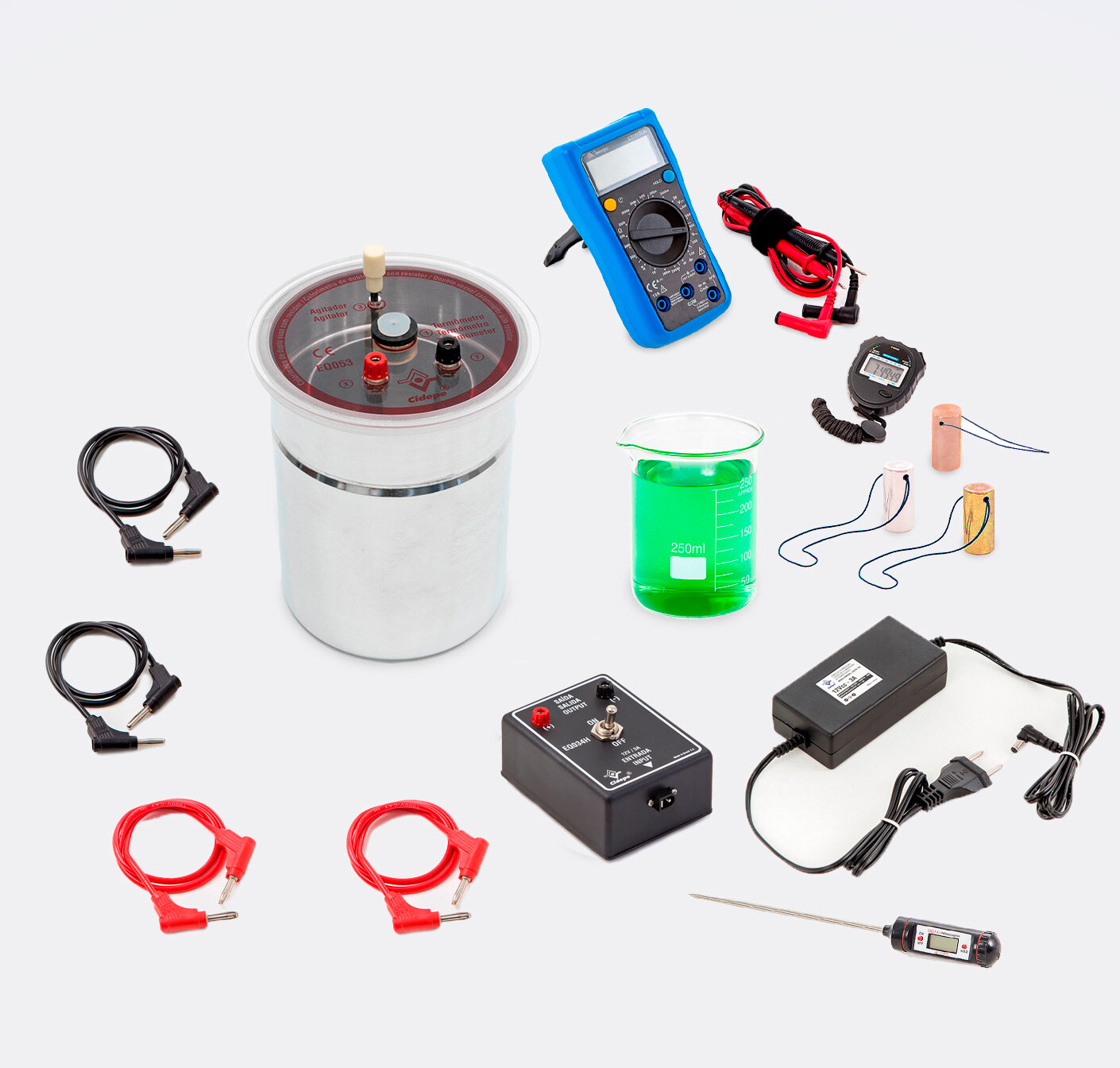
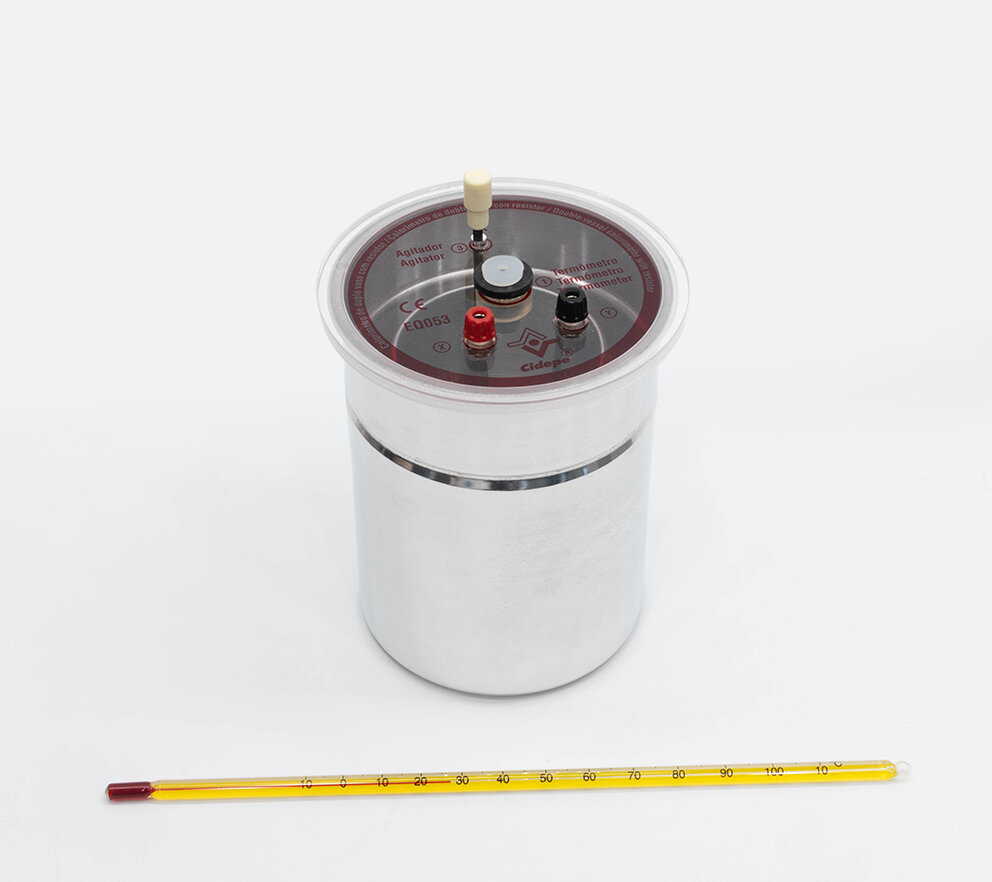
Mechanical equivalent set of heat by Joule effect, calorimeter
Code: EQ213E
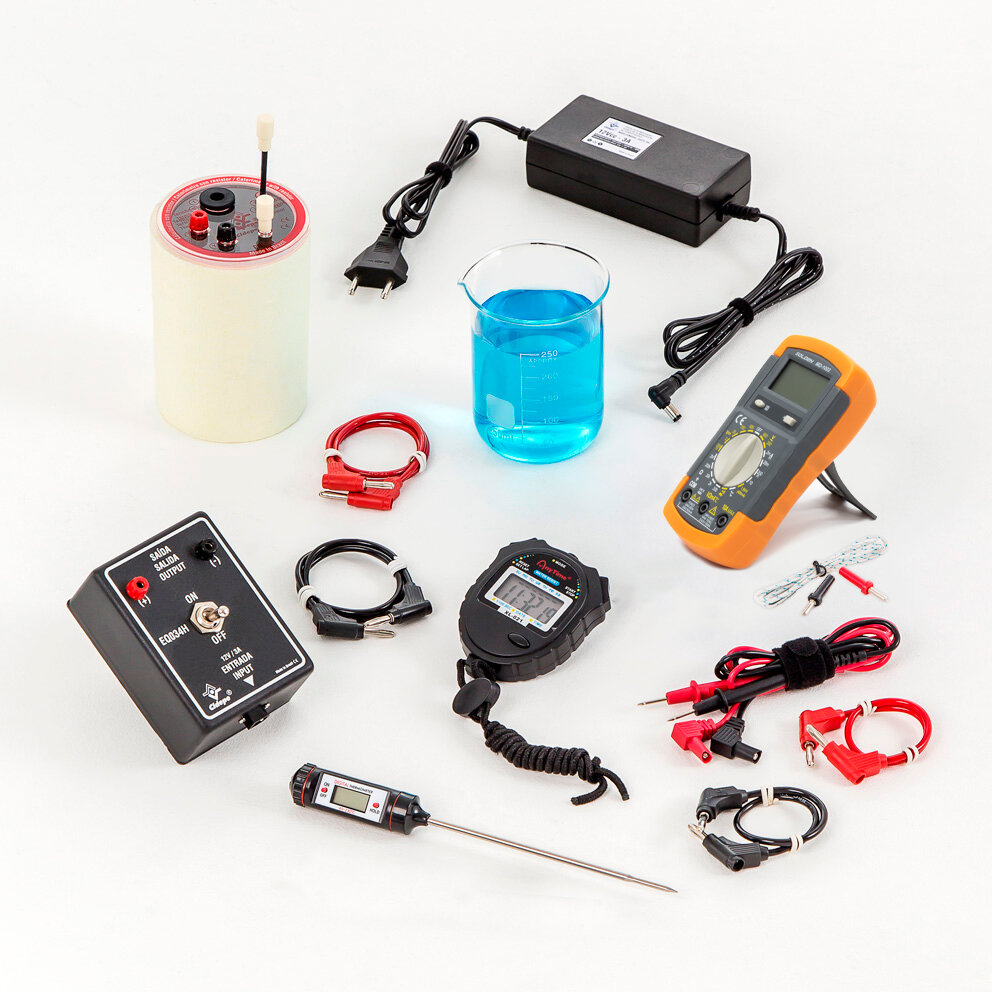
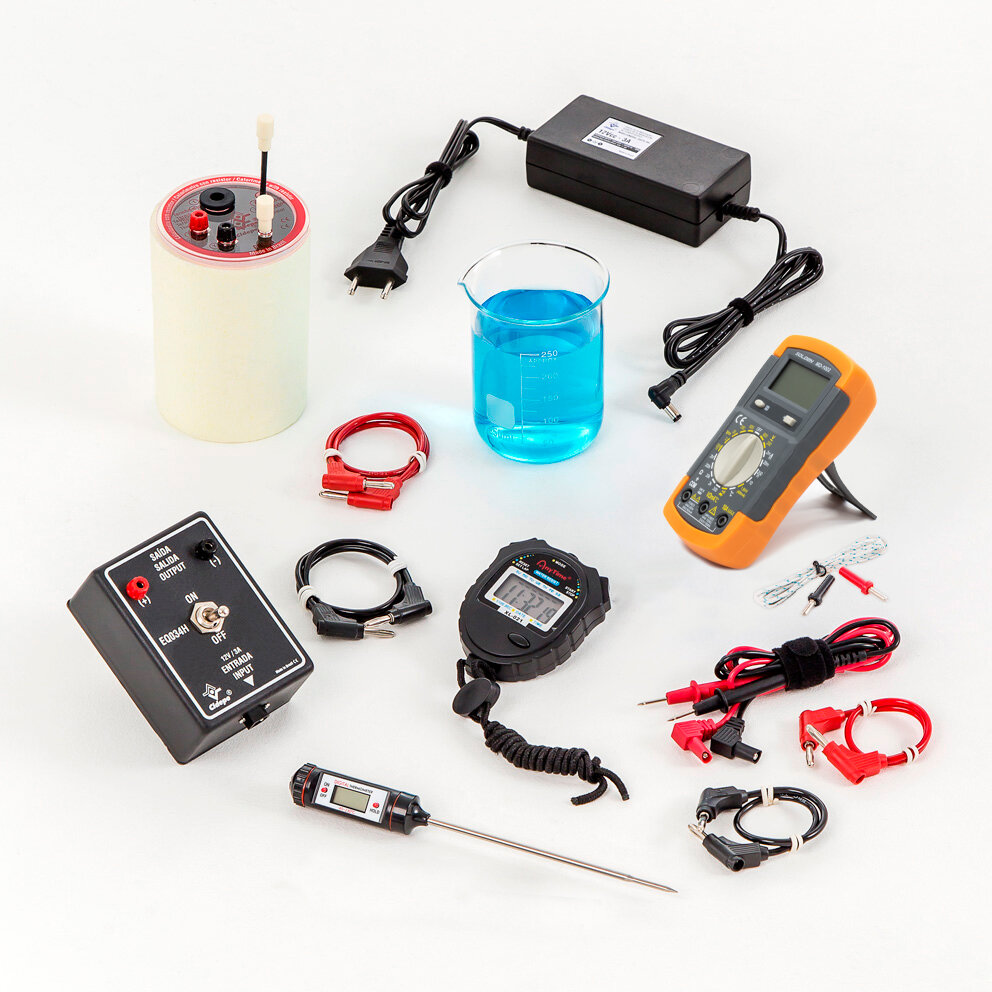
Function
Intended for experimental study, physics laboratory and carrying out physics experiments on: Physics. Thermodynamics, Calorimetry. The water equivalent and heat capacity of a calorimeter. What is a calorimeter for? What is the water equivalent of a calorimeter? What is heat? Energy balance, principle of heat exchange. Measuring the final temperature, thermal equilibrium temperature. Determining the water equivalent of the calorimeter. Determining the heat capacity of the calorimeter. Specific heat, mass heat capacity, of a solid. Specific heat. Measuring the temperature and determining the mass of cold water. Measuring the temperature of the solid test specimen and determining its mass. Measuring the final temperature, thermal equilibrium temperature. Using the principle of conservation of energy, principle of heat exchange. Determining the specific heat of copper. Specific heat, mass heat capacity, of different solids. Determining and comparing the specific heat, mass heat capacity, of different solids. Latent heat of fusion of ice. Latent heat. Using the principle of conservation of energy, principle of heat exchange. The temperature and mass of heated water. Measuring the final equilibrium temperature. Determining the mass of ice by difference. Determining the latent heat of fusion of ice. The mechanical equivalent of heat, using the energy dissipated by the Joule effect. Understanding the calorimeter with resistor. The difference between resistor and electrical resistance. The mechanical equivalent of heat, operator J that allows the exchange of the calorie unit for joule and vice versa. The amount of heat transferred by the electrical resistance of the resistor to the calorimeter and water system. Using conservation of energy, principle of heat exchange. Measuring the temperature and determining the mass of cold water. Measuring the voltage acting on the calorimeter resistor. Measuring the heating time. Measuring the final temperature, thermal equilibrium temperature. Determining the mechanical equivalent of heat. Percentage relative error. The average value of the mechanical equivalent of heat and its uncertainty, etc.
Quote product

Main experiments
- The water equivalent and heat capacity of a calorimeter. 1052.030E1
- The mechanical equivalent of heat, using the energy dissipated by the Joule effect. 1052.030E4
- The specific heat, or mass heat capacity, of a solid. 1052.030E2
- The latent heat of fusion of ice. 1052.030E3