
 Português
 English
 Español
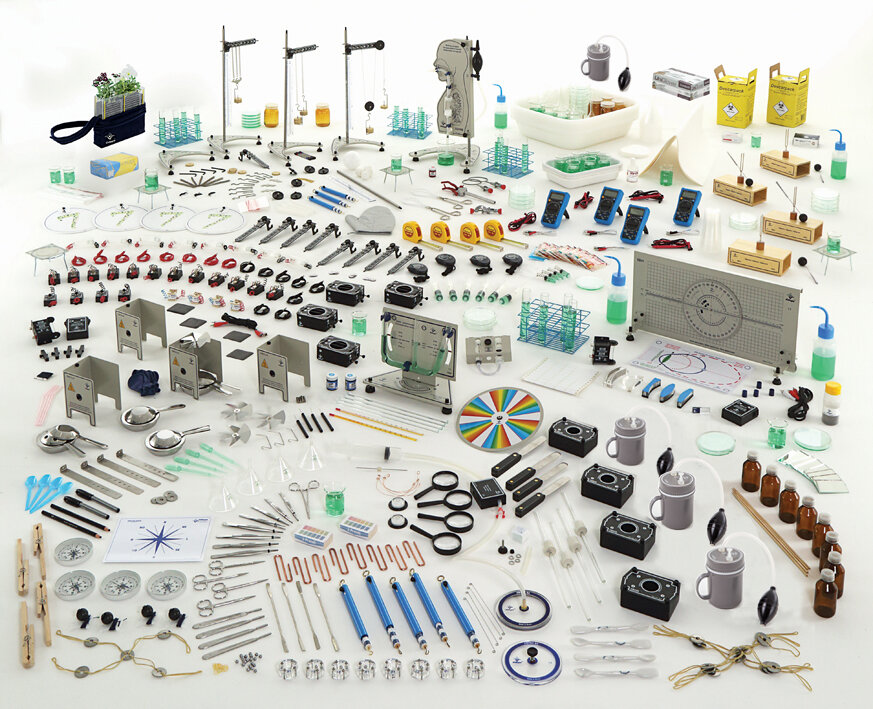
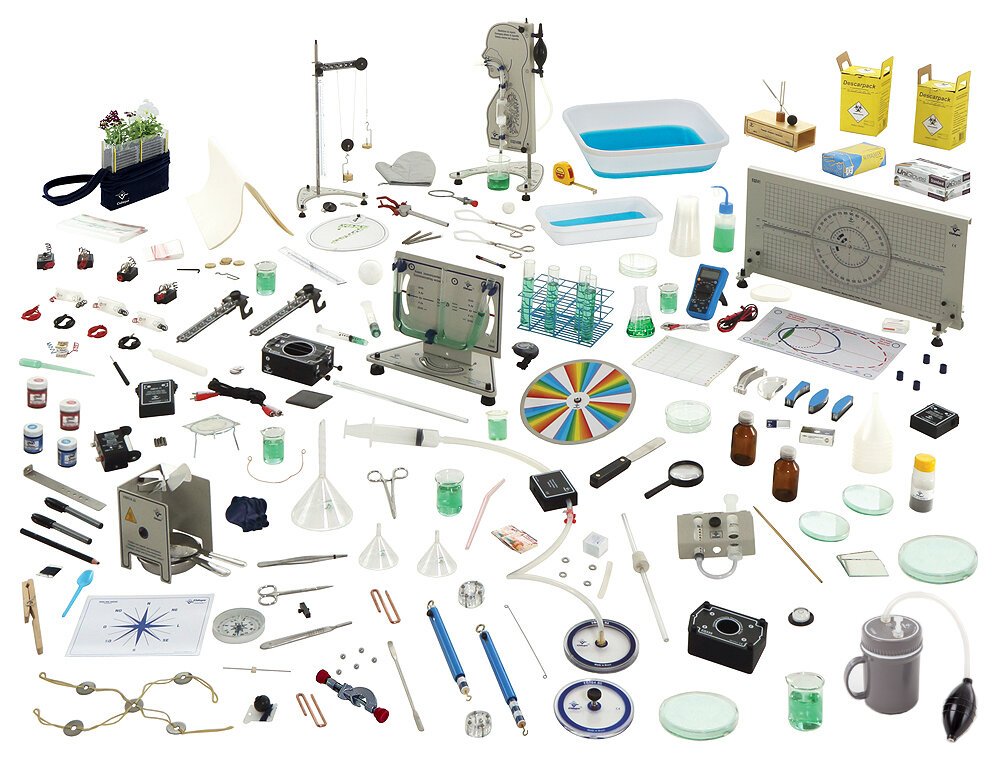
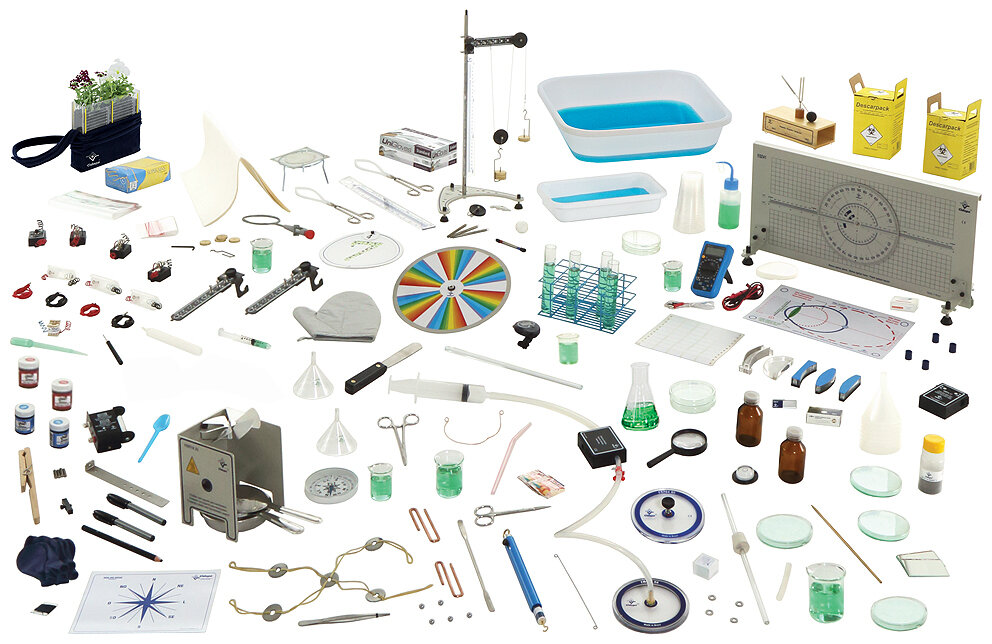
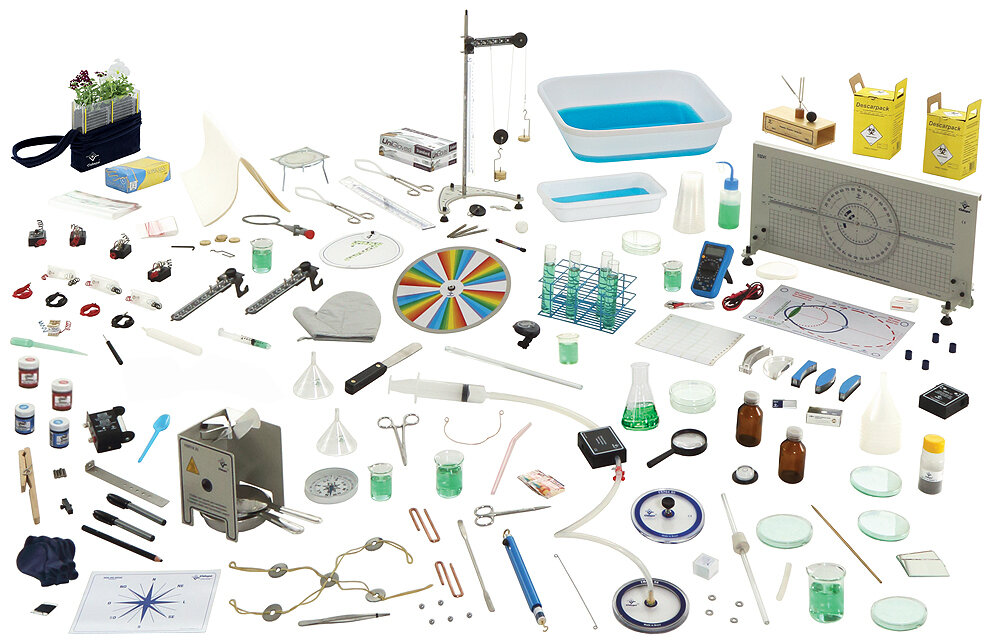
set of natural sciences
Code: KE055K3
Function
Intended for the study of: Elementary School 1. Life and evolution. Is water necessary for seed germination? The influence of light on the sprouting and development of sunflower seeds. The function of roots in a plant. Earth and Universe. The water contained in the soil. Proving the existence of air. The functioning and use of a compass. Matter and Energy. The free surface of still water is horizontal. The evaporation of water, the slow passage from the liquid state to the vapor state. Heat makes the melting of ice faster. The general properties of matter. Separating objects using a magnet. Natural Sciences Elementary School 2. Life and evolution. The identification of some seeds. The stem conducts sap to all parts of the plant. The decomposition of fruit by the action of mold. The macroscopic fungus. Vision defects, the correction of ametropia, hyperopia and myopia with lenses. Do I have color blindness? How the environment determines the germination power of seeds. Earth and universe. How to identify humus-rich, sandy, and clayey soils? Soil contains mineral salts. Does air occupy space? Does the air we exhale contain water vapor? The condensation of water vapor contained in the air. Air expands when heated and contracts when cooled. Some components of the air we breathe: oxygen and carbon dioxide. Matter and energy. The solidification of water, obtaining colored ice. Soil erosion caused by the increase in water volume upon freezing. The melting of ice, the change of state of water from solid to liquid. Some specific properties of matter. Force, mechanical deformations, plastic deformation, and elastic deformation. Observing the compressibility and elasticity of air. Lines of force and the magnetic field of a magnet, magnetism. How to separate heterogeneous mixtures through simple filtration? How to separate heterogeneous mixtures through magnetic separation? Decantation and filtration, two steps for water purification. Identifying water and carbon in sugar. Producing oxygen through a chemical reaction. A simple machine called a fixed pulley. The burning of a candle produces light and heat. Thermal sensation and temperature. A simple machine called a movable pulley. The difference between heat and temperature. The means of heat propagation. The composition of colors on a Newton's disc. Light, the properties of rectilinear propagation and the independence of rays. The effect of light when it strikes a polished surface. Reflection in concave and convex spherical mirrors. The refraction of light and its laws, diopters. Electrical conductors and electrical insulators. Series, opposite, and parallel connections between batteries. Biology. Chlorophyll, a substance found in most green plants. What are the structures of a flower? What are yeasts like? What conditions does the egg provide for the development of a bird? The differentiation between force and pressure. Comparing the germination power of seeds. Phototropism in plants. Comparing different amounts of the hormone auxin in a type of seed. Differences between monocotyledons and dicotyledons. The influence of different types of water on seed development. How do animals support themselves and move? Where are bacteria found? Physics. The simple pendulum. The functioning of a dynamometer, the calibration of a rubber ring and a helical spring. Inflating a balloon by decreasing external pressure. The thermoscope. Sound, a longitudinal mechanical wave. Sound, the Doppler effect. Permanent magnets, temporary magnets, and the electromagnet, etc.
Quote product

Main experiments
- Comparing the germination power of seeds. 1481.041A
- How the environment determines the germination power of seeds. 1481.436A
- Phototropism in plants. 1481.437A
- Comparing different amounts of the hormone auxin in a type of seed. 1481.438A
- Differences between monocotyledons and dicotyledons. 1481.440A
- The influence of different types of water on seed development. 1481.441A
- The influence of light on the sprouting and development of sunflower seeds. 1481.442A
- The different tissues of the root, stem, and leaf of the bean. 1481.444A
- Is water necessary for seed germination? 0001.045
- The function of roots in a plant. 0001.150
- The water contained in the soil. 0001.210
- Proving the existence of air. 0001.310
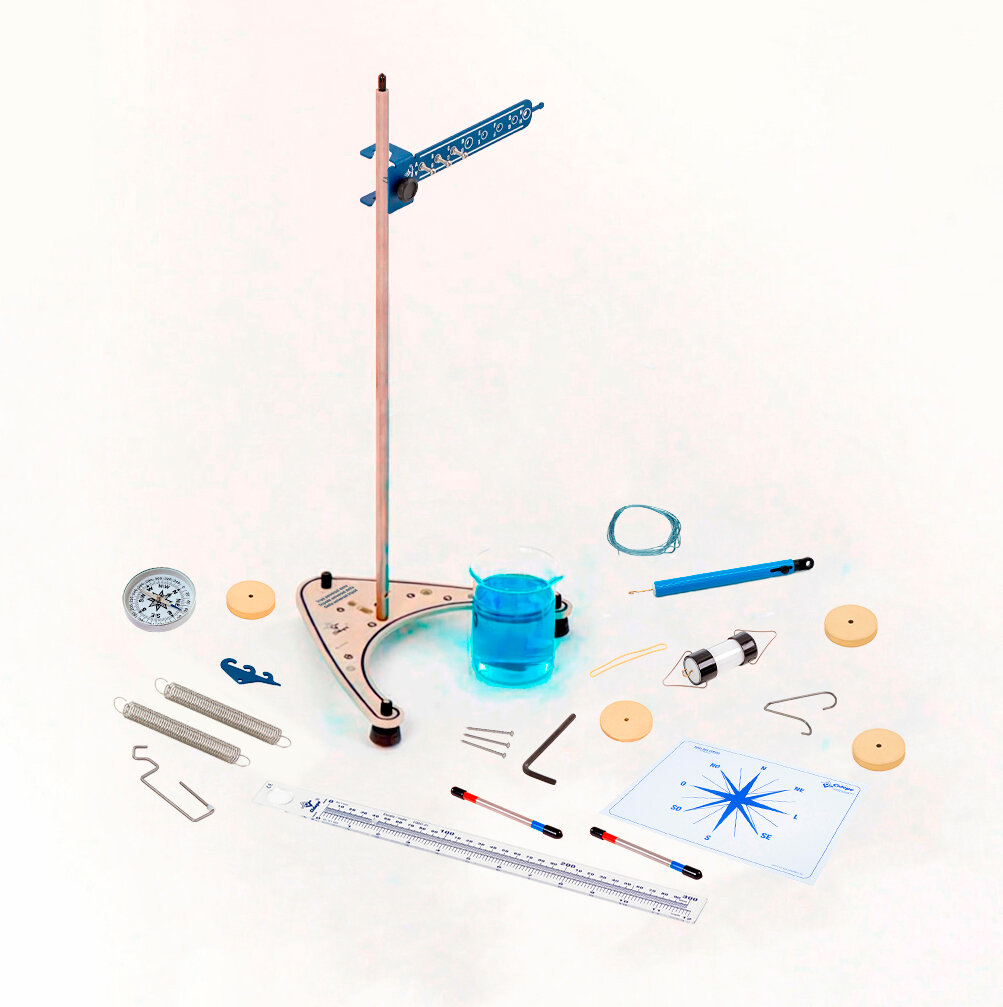
- The functioning and use of a compass. 1082.124
- The free surface of still water is horizontal. 0001.090
- The evaporation of water, the slow transition from the liquid state to the vapor state. 0001.075A
- Heat makes ice melt faster. 0001.080
- The general properties of matter. 0001.100
- Separating objects using a magnet. 0001.275
- Identifying some seeds. 0001.040
- The stem conducts sap to all parts of the plant. 0001.340
- Fruit decomposition due to mold growth. 0001.245
- The macroscopic fungus. 0001.260A
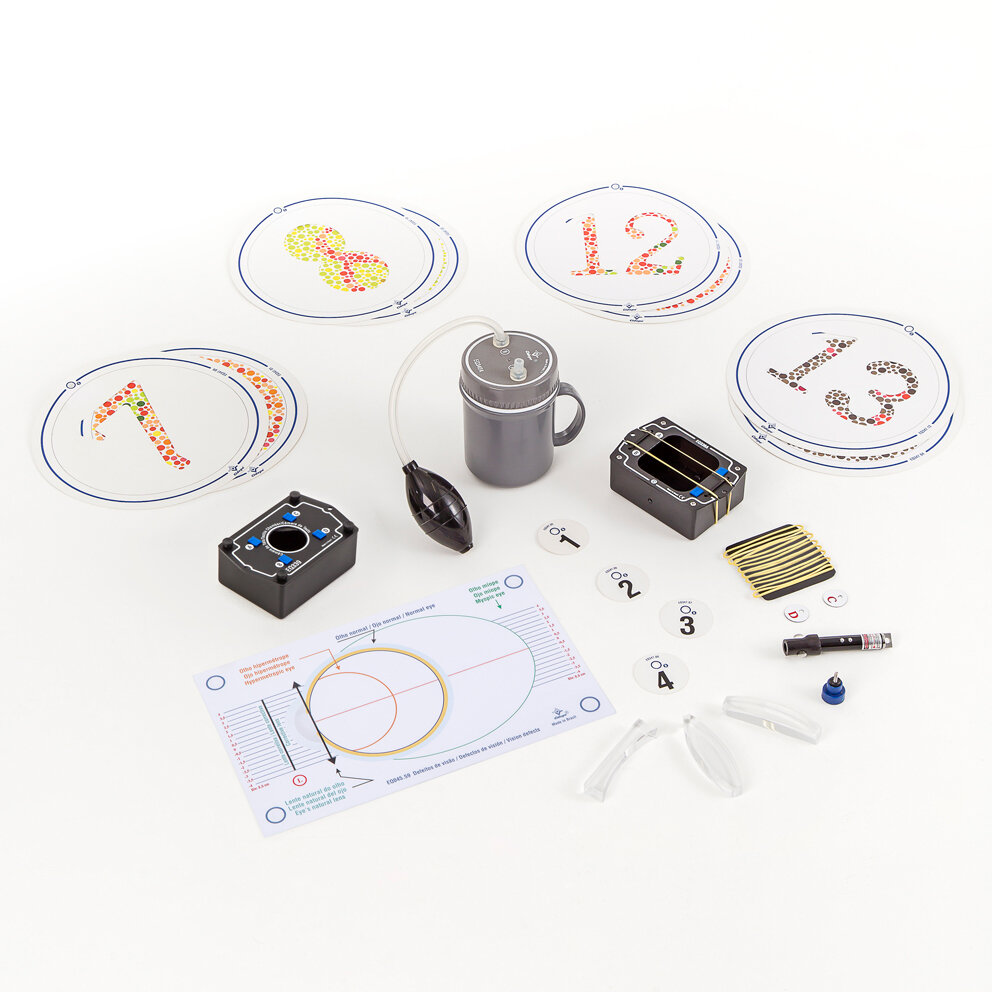
- Vision defects, correction of ametropia, hyperopia and myopia, with lenses. 1062.003E7
- Could I be colorblind? 1505.130
- How to identify humus-rich, sandy, and clayey soils? 0001.050
- The soil contains mineral salts. 0001.220
- Does air occupy space? 0001.095
- Does the air we exhale contain water vapor? 0001.085
- The condensation of water vapor contained in the air. 0001.060
- Air expands when heated, and contracts when cooled. 0001.110
- Some components of the air we breathe: oxygen and carbon dioxide. 0001.325
- The solidification of water, obtaining colored ice. 1052.008_A4
- Soil erosion caused by the increase in water volume upon freezing. 0001.070
- The melting of ice, the change of state of water from solid to liquid. 0001.065
- Some specific properties of matter. 0001.102A
- Force, mechanical deformations, plastic deformation and elastic deformation. 1032.018
- Observing the compressibility and elasticity of air. 0001.330
- The lines of force and the magnetic field of a magnet, magnetism. 1082.120A
- How to separate heterogeneous mixtures using simple filtration? 1212.012_1
- How to separate heterogeneous mixtures using magnetic separation? 1212.012_2
- Decantation and filtration, two steps in water purification. 0001.200
- Identifying water and carbon in sugar. 0001.290
- Producing oxygen through a chemical reaction. 0001.125
- A simple machine called a fixed pulley 0001.046A
- A simple machine called a movable pulley. 1032.026J_0
- The burning of a candle produces light and heat. 0001.235
- The difference between heat and temperature 1052.004C2
- Wind chill and temperature. 0001.300A
- The means of heat propagation. 1052.025A
- The composition of colors on a Newton's disc. 1062.004R
- Light, the properties of rectilinear propagation and the independence of rays. 1062.003E1
- The effect of light hitting a polished surface. 1062.003E2_2
- Reflection in concave and convex spherical mirrors. 1062.003E4_2
- The refraction of light and its laws, the diopters. 1062.003E5_2
- Electrical conductors and electrical insulators. 1082.036
- Series, opposition, and parallel connections between batteries. 1082.040
- What are yeasts like? 0001.255
- Where are the bacteria? 1505.013
- Chlorophyll, a substance found in most green vegetables. 0001.175
- What are the structures of a flower like? 0001.180
- What conditions does the egg provide for the bird to develop? 0001.240
- How do animals support themselves and move? 1491.006
- The distinction between force and pressure. 1032.092A
- The Magdeburg Hemispheres Experiment and Atmospheric Pressure. 1032.093
- Inflating a balloon, decreasing the external pressure. 1032.094C
- The operation of a dynamometer, the calibration of a rubber ring and a helical spring. 1032.022B
- The simple pendulum. 1032.015A
- The thermoscope. 1052.004B
- Sound, a longitudinal mechanical wave. 1072.059
- Sound, Doppler effect. 1072.061
- Permanent magnets, temporary magnets, and electromagnets. 1082.140
- Assembly: The helical spring and Hooke's law 1032.052B_M