
 Português
 English
 Español
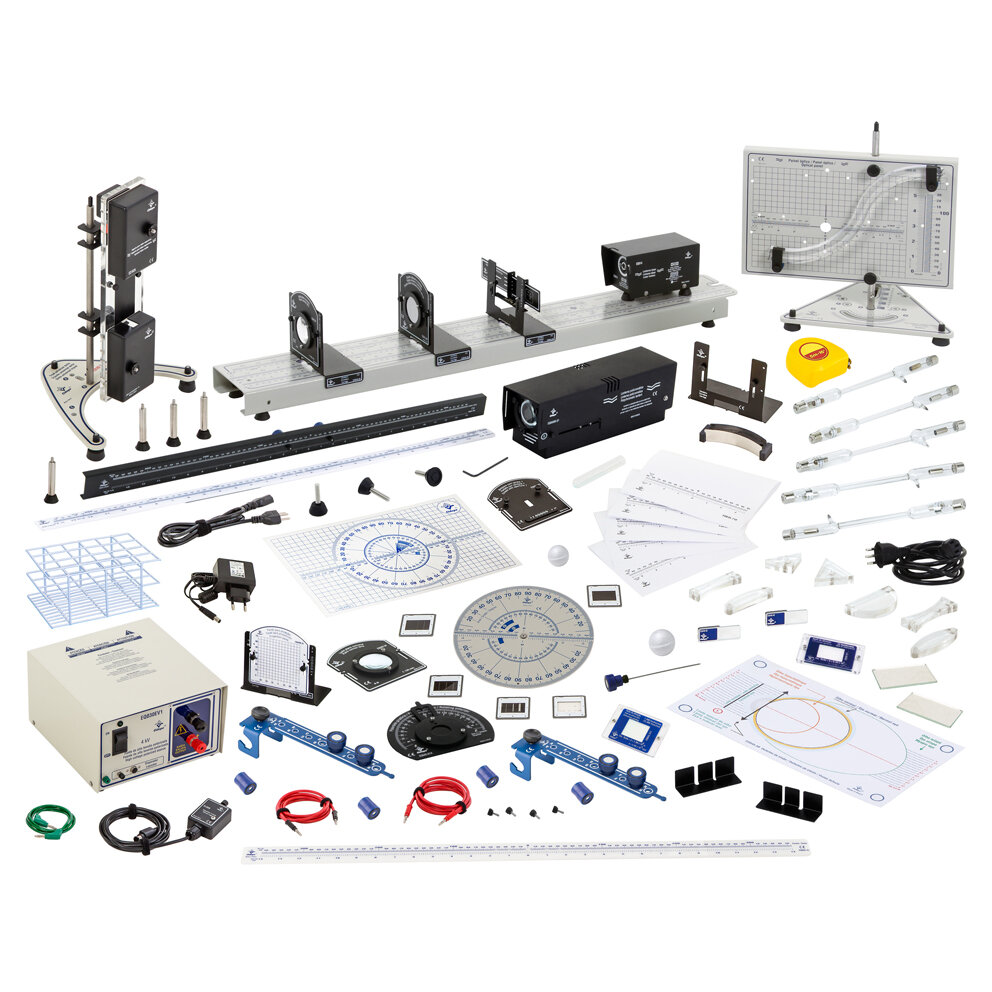
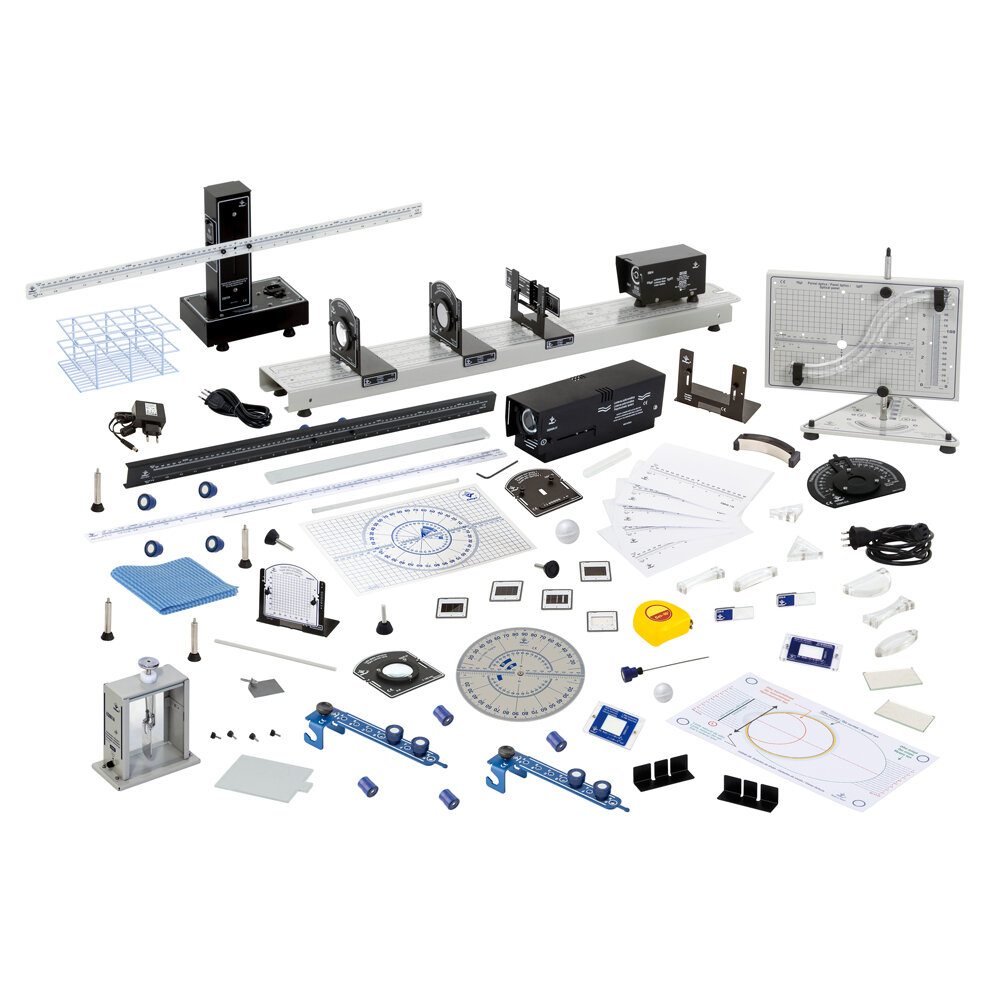
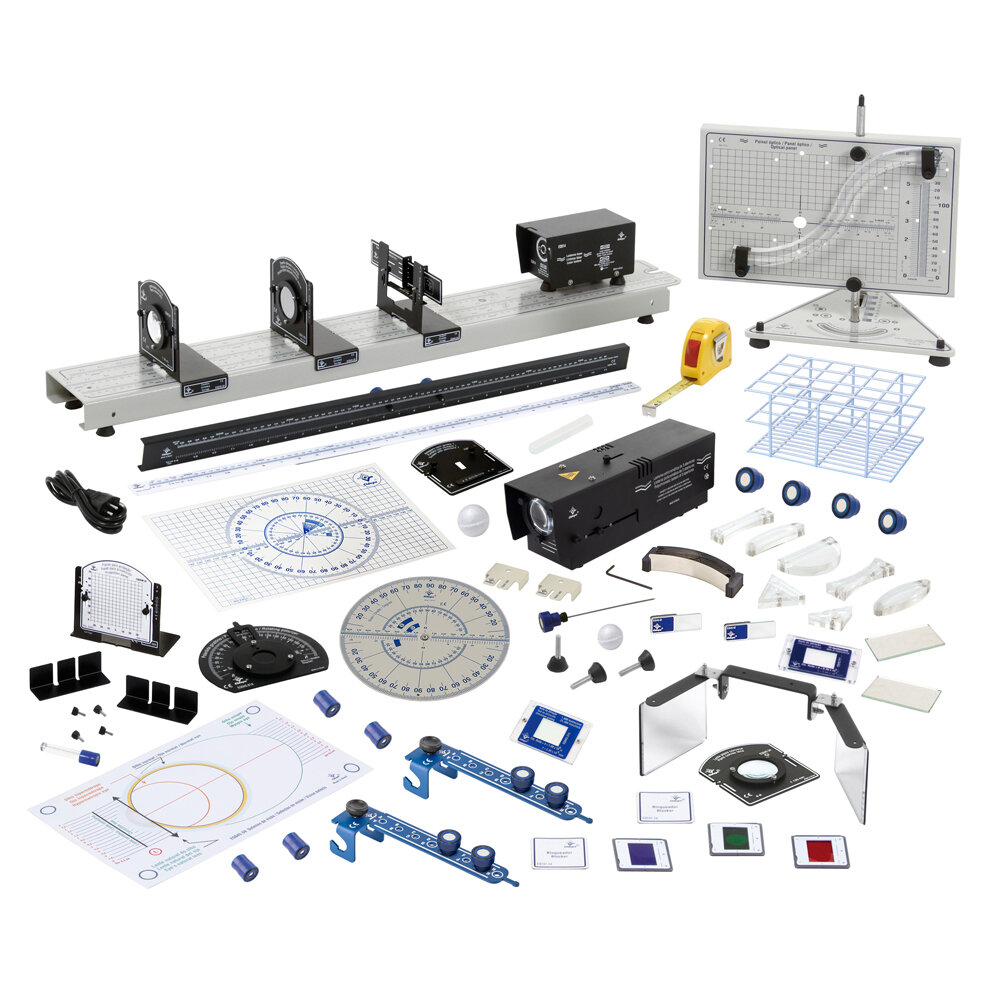
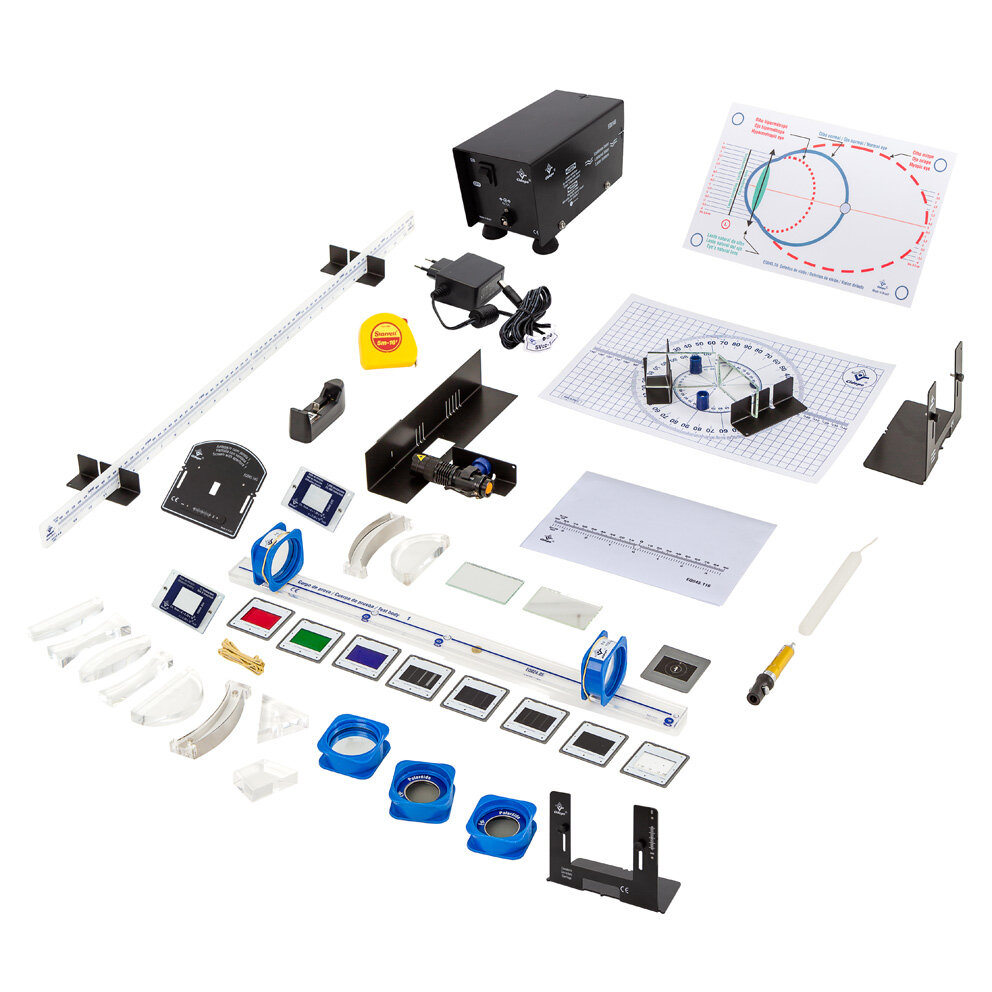
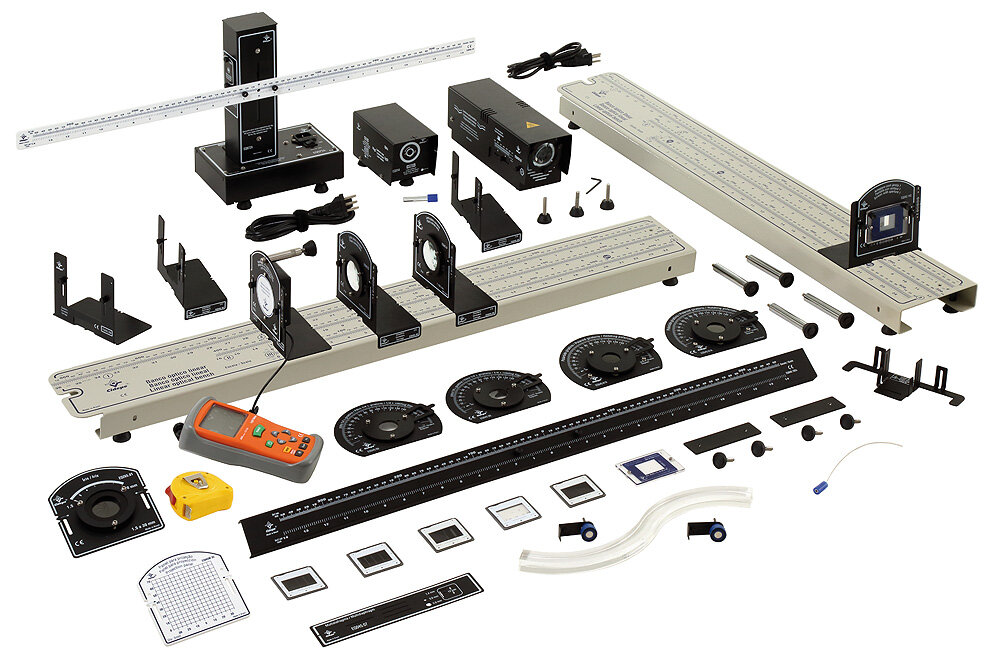
Linear optical bench, double busbar, mercury spectral lines, monochromatic and polychromatic flashlights
Code: EQ045M

Function
Intended for experimental study, physics laboratory work, and conducting physics experiments on: Physics. Light and optics. Gauss's law, the relationship between the object, the lens, and the image. The Gaussian reference frame. The conjugate points function, Gauss's equation. Transverse linear magnification, enlargement. Classification of the image formed by the lens as a function of the sign of the linear magnification. The construction of some optical instruments. Building a magnifying glass. Building a compound optical microscope. The conjugate image. The transverse linear magnification of the compound microscope. Building a terrestrial telescope. Modern physics. Light and physical optics. Measuring the average wavelength of the colors of the continuous light spectrum, diffraction. Diffraction and Huygens' principle. Light interference, Young's double-slit experiment, and the wavelength of light. Observing and classifying the colors of the white light spectrum. Determining the wavelength of red radiation in the white light spectrum. Determining the wavelength of radiation of the other colors in the white light spectrum. Measuring the wavelength of mercury spectral lines, high shoes. Diffraction of light by holes and slits. Diffraction and Huygens' principle. The central point and the central maximum. Regions of constructive interference. The behavior of light when passing through a hole. The behavior of light when passing through three pairs of double slits. The behavior of light when passing through three consecutive sets of slits. Using a hole of known diameter to determine the wavelength of a laser. The diffraction angle. Bessel's function and the equation to find the wavelength of a laser. Diffraction of laser light by a diffraction grating with a lattice constant of 1.00 x 10¿6 m. What Huygens' principle states. Diffraction and Huygens' principle. Points of constructive interference. Diffraction of laser light with a diffraction grating of a lattice constant of 8.33 x 10¿5 m. Comparing the polarization of laser light with the polarization of polychromatic light. Light, light polarization, and the Polaroid. Plane-polarized light. Luminous flux density on a surface. The difference between luminous flux and radiant flux. The illuminance of a surface, surface luminous flux density. The lumen and the lux. The relationship between illuminance and the distance between the light source and the illuminated surface. Illuminance over an illuminated area. Measuring illuminance over an illuminated area with a luxmeter. Malus's law, luxmeter. Light, light polarization, and the Polaroid. Plane-polarized light. Transmitted light and the amplitude of the electric field. What Malus's law states. The relationship between the intensity of light transmitted by the polarizer and the intensity of incident light, etc.
Quote product

Main experiments
- Gauss's law, the relationship between the object, the lens, and the image. 1062.004L
- The construction of some optical instruments. 1062.004P
- Diffraction is the measurement of the average wavelength of colors in the continuous light spectrum. 1062.004Q
- The measurement of the wavelength of the spectral lines of Mercury, high shoes 1062.004MN_0
- Diffraction of light through holes and slits. 1062.003D
- Diffraction of laser light by a diffraction grating with a grating constant of 1.00 x 10 1062.003M1
- Diffraction of light from a laser with a diffraction grating of lattice constant 8.33 x 10 1062.004D1
- Comparing the polarization of laser light with the polarization of polychromatic light. 1062.003N
- The density of luminous flux on a surface. 1062.041A
- The illumination over the illuminated area. 1062.042A
- Measuring the illuminance over the illuminated area using a lux meter. 1062.044A
- Malus's law, lux meter. 1062.005